How to know when to stop a tidy reset
Define what useful looks like before you begin. Fit a task to the available time and stop without turning a small reset into a whole-house project.
A practical guide · Photos and AI optional
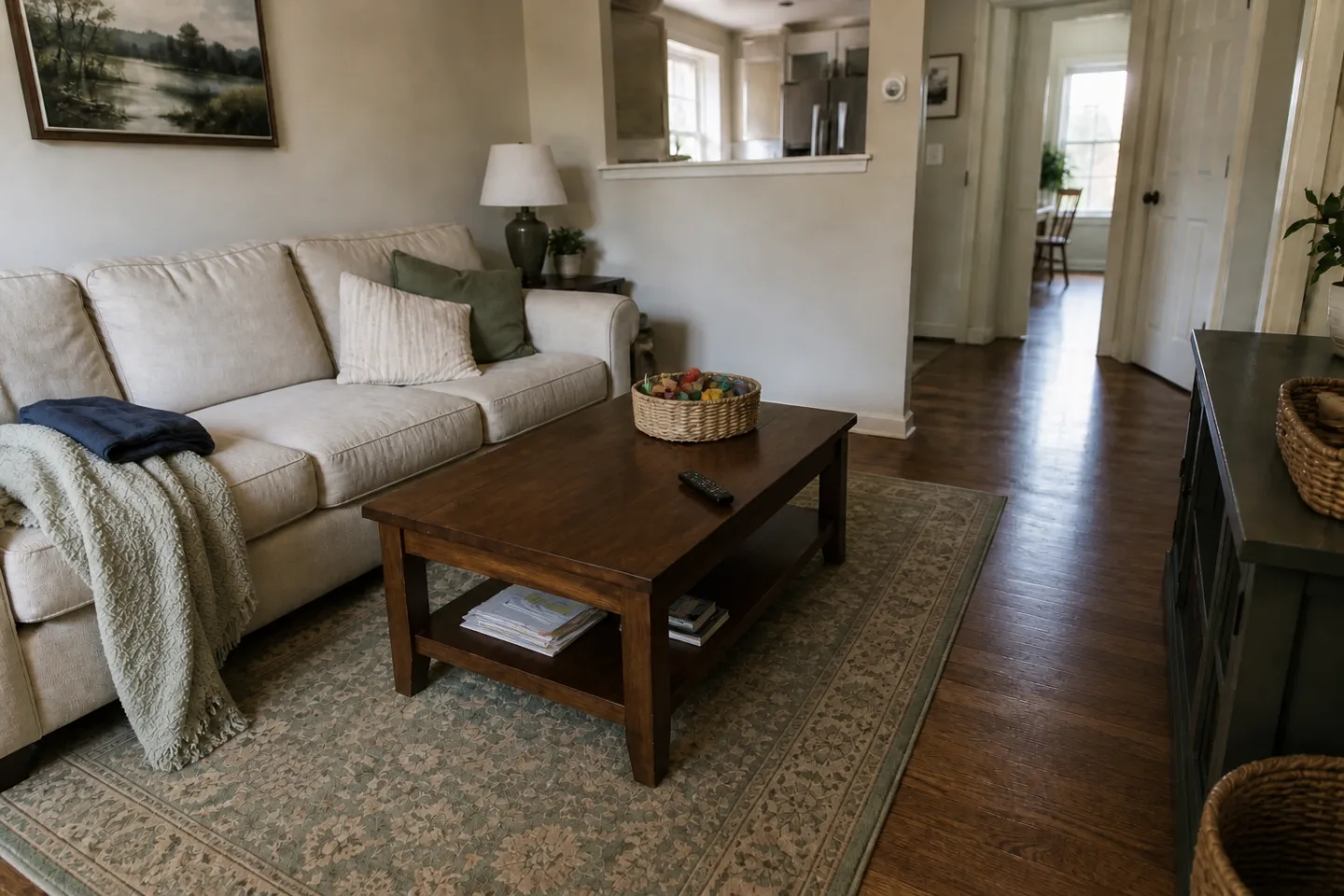
Decide what better means today
Before starting, complete this sentence: After this reset, I want to be able to… It could be sit on the sofa, use a patch of counter or walk through the room. A concrete purpose makes the finish easier to recognize than a general instruction to do more.
Your useful stopping point can differ from someone else’s. Tidy 20’s room examples are illustrations, not measured customer results or a standard your home must match. An inviting room can still contain possessions, unfinished activities and evidence that people live there.
Give one task the time you actually have
Choose a room and a recognizable manual task, then set the available time in Today. A short block is a boundary for this session. It is not a promise that the task should take that long or that you should work faster to meet an estimate.
If the task contains several jobs, start with the one that serves your purpose. Returning books and rearranging the bookcase are different scopes. Keep a bigger idea for another time so it does not quietly consume the small reset you intended to do.
Use an early finish when it is useful
If the path is clear or the surface works before the countdown ends, you can finish the task early. There is no requirement to keep moving things simply because time remains. You can stop, or deliberately choose another task if that still fits your day.
If the block ends first, look at what changed. Some progress can be useful even when the task is unfinished. Keep the actual completion state honest. Ending the reset and completing every planned task are separate actions, and your timing is more meaningful when those are not confused.
Let reflection be brief or wait
A short note such as Storage was already full can explain a difficult session. You do not need a long report after each reset. If you have nothing to add or need to leave, skip the reflection and return when it is useful.
When the same difficulty comes back, treat it as a question about the setup rather than a conclusion about a person. The route to the storage, the clarity of the task or an interruption might matter. A rating or a single slow timer cannot tell you the cause by itself.
Choose a smaller next visit
Use what actually happened to choose the next task. You might give the same job more time, narrow it to a smaller area or arrange a destination before starting. Make one change that you can notice rather than trying to optimize every detail at once.
Starting again does not require restarting the whole home. Keep the room and task recognizable, choose a useful purpose for today and leave the rest outside this block. Free accounts can use one saved room, manual tasks and the timer without photos or AI.
Write one useful finish line, then choose the time that fits today.
Requesting beta access does not start a subscription. Invitations depend on availability.