Toy pickup with a stopping point everyone can see
Start with a clear path or one play area. Keep toy pickup small, use existing storage, and notice practical barriers without judging the people using the room.
A practical guide · Photos and AI optional
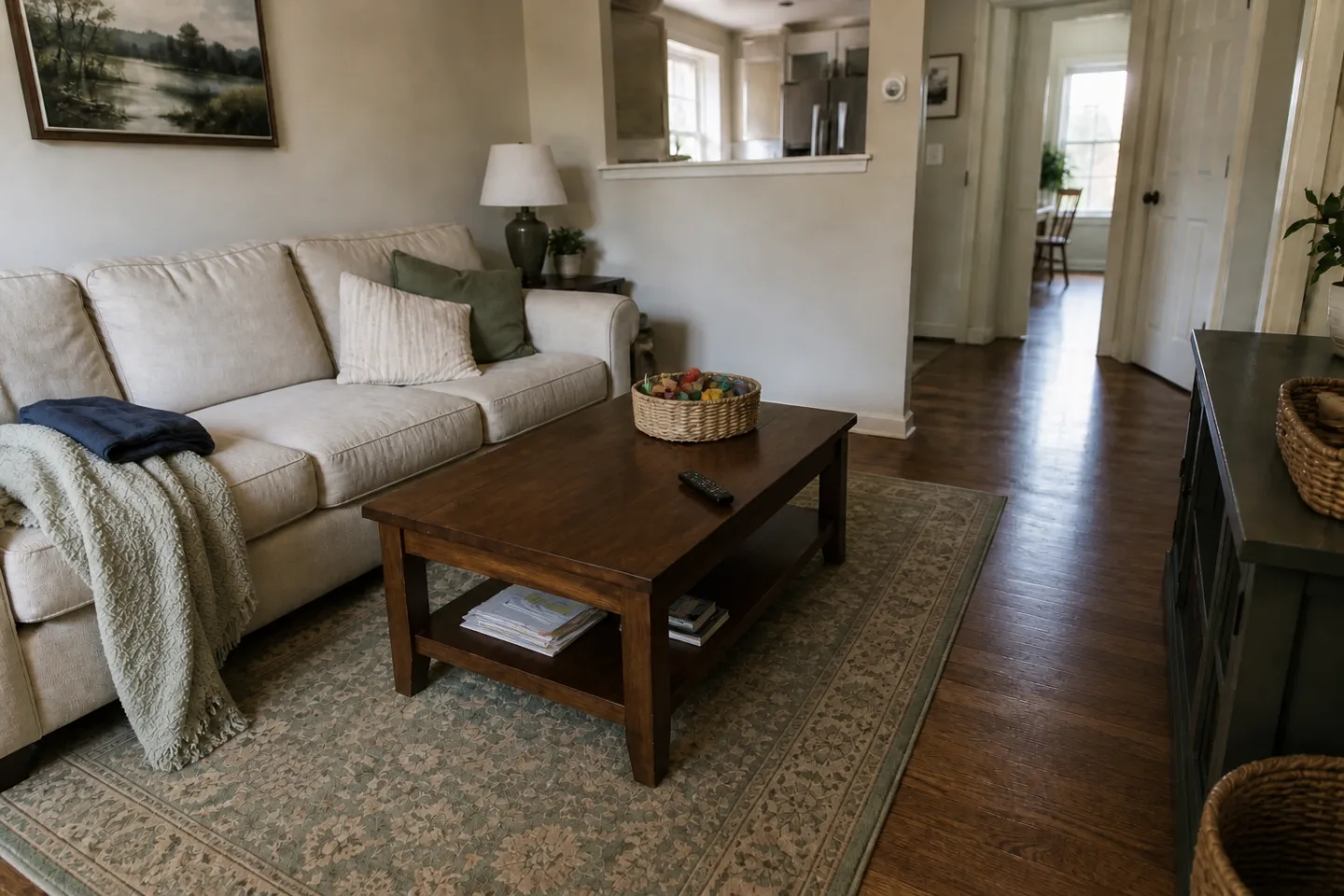
Name a visible finish line
Pick a part of the room that would be easier to use after pickup. Put the blocks back from this path is clearer than Fix the playroom. A smaller task also makes it easier for anyone helping to tell when they are done.
Add the room and a manual Toys on the floor task in Tidy 20. Keep the task label familiar. You can use the room and timer without uploading pictures or asking AI to interpret the space. Choose the amount of time available rather than expecting every toy to be put away in one block.
Check the destination before the timer
Look at where the toys are supposed to go. Can the people helping reach it, recognize it and use it? A full container, an awkward lid or several unclear categories can make a simple-sounding instruction much harder to follow.
Use storage and labels you already have before adding another product. A quick demonstration of which things belong together may be more useful than a longer instruction. Keep this about the arrangement and the task; a messy floor does not tell you why a person did or did not put something away.
Give helpers different small jobs
If you want a shared countdown, use Tidy together. An account holder hosts and guests join with a link or code and display name. A shared sprint does not require sharing a paid subscription, and it does not open anyone’s saved household or private photos.
Choose tasks that fit the people participating: one collects blocks, another clears the path, another returns books. Agree on the finish before starting. The countdown coordinates a block of work; it is not a race or a comparison of how quickly different people move.
Leave room for ordinary play
A room can be ready to use without looking untouched. Decide whether an ongoing construction or an activity in progress can stay in a deliberate spot. A useful room and a completely empty floor are not always the same goal.
When the block ends, check the specific finish line you chose. Stop when it is useful, or leave a smaller next task if more work remains. Do not mark an unfinished task complete just because the timer ended. Your record is more useful when it reflects the actual result.
Notice the practical sticking point
If pickup is repeatedly difficult, notice an ordinary transition before changing the system. Is the destination missing, hard to reach or unclear? Is the next activity starting before anyone knows the previous one is finished? More than one explanation may fit.
Try one simple change when you are ready, such as one clearer label or a more convenient location, and notice what happens. Do not turn every play session into a test. The aim is an easier ordinary routine, not a perfect room or a judgment about a child.
Choose one visible toy-pickup task, or start a free shared sprint.
Requesting beta access does not start a subscription. Invitations depend on availability.